

Community Commentary features thoughtful expert and community voices tackling thorny questions around diagnosis, informed consent, psychiatric treatment, and the ethics of care.
This piece was contributed by: Elizabeth Curley, MSW, Ph.D., and Jeffrey Lacasse, MSW, Ph.D.
In 2024, the Office of Inspector General (OIG) investigated the voluntary admission of a veteran seeking substance withdrawal treatment, finding that staff had not informed the veteran of treatment occurring on a locked mental health unit. After admission, the veteran said they hadn’t agreed to that choice and probably wouldn’t have accepted the admission if they had known. When OIG interviewed 17 facility leaders and staff, some did not even know who was responsible for providing that information. Others gave conflicting answers.
This oversight is no small incident. This missing information was central to the veteran’s decision. The veteran could not meaningfully agree to a locked admission – and thus their overall treatment – without knowing the unit was locked.
The consequences of an unstructured consent process are not hypothetical—as we see from so many veterans who are brave enough to share in their stories.
What should have happened?
Should the veteran receive something in writing so the information can be reviewed later, after a night’s sleep? Should there be a record of what was discussed?
Or do we assume that the existing conversation was enough?
This is the basic dilemma that the newly proposed Written Informed Consent Act is trying to address. H.R. 4837, introduced in August 2025, would direct the Department of Veterans Affairs (VA) to extend the more formal consent process currently used for long-term opioid therapy, to apply to antipsychotics, stimulants, antidepressants, anxiolytics, and narcotics. A Senate companion, S.3314 followed shortly after in December.
Both remain before their respective VA committees and neither chamber has voted, but by April 2026, 34 veterans’ organizations publicly backed the proposal.
The bill is not perfect. First, it cites a previous VA directive that no longer exists as a standalone policy. The VA rescinded that directive after incorporating its long-term opioid consent requirements into the current system-wide informed consent policy. Congress could, and should, correct that.
Second, there is the risk that written informed consent becomes another layer of meaningless paperwork; people regularly sign documents that they haven’t read or do not understand. A signature alone does not protect against uninformed consent.
Despite necessary improvements, these reasons are not enough to oppose the bill entirely. The bill, as it stands, currently provides the best current protection for veterans to be truly informed about the care they are opting into.
Yet, several national medical and mental-health organizations have urged Congress to oppose the proposal. The National Association of Social Workers (NASW) joined the American Psychiatric Association, Mental Health America, and three national physician organizations in an opposition letter.
As social workers actively working in the space, we were curious about this choice. So we contacted NASW to better understand why our representative professional association did not support a bill we think would be helpful to our practice.
We asked about the evidence, ethical considerations, member consultation, or policy analysis it relied on to conclude that written informed consent would be harmful to care.
NASW responded:
“We met with leaders from multiple national mental health organizations to discuss the letter. Through our internal process, including consultation with our Director of Clinical Practice and Chief of Programs, we decided to sign on.
We considered the impact on practice and clients. Our assessment was that the proposed requirements in the legislation were duplicative and would cause more harm than good.”
The primary argument of the NASW’s response and the opposition letter is that the proposal would be duplicative to existing informed consent procedures.
It is true that current VA policy already requires informed consent. Clinicians are instructed to explain risks, benefits, reasonably foreseeable risks and side effects, available alternatives, and the option of no treatment. They must invite questions and promote voluntary decision-making. A thoughtful policy, on paper.
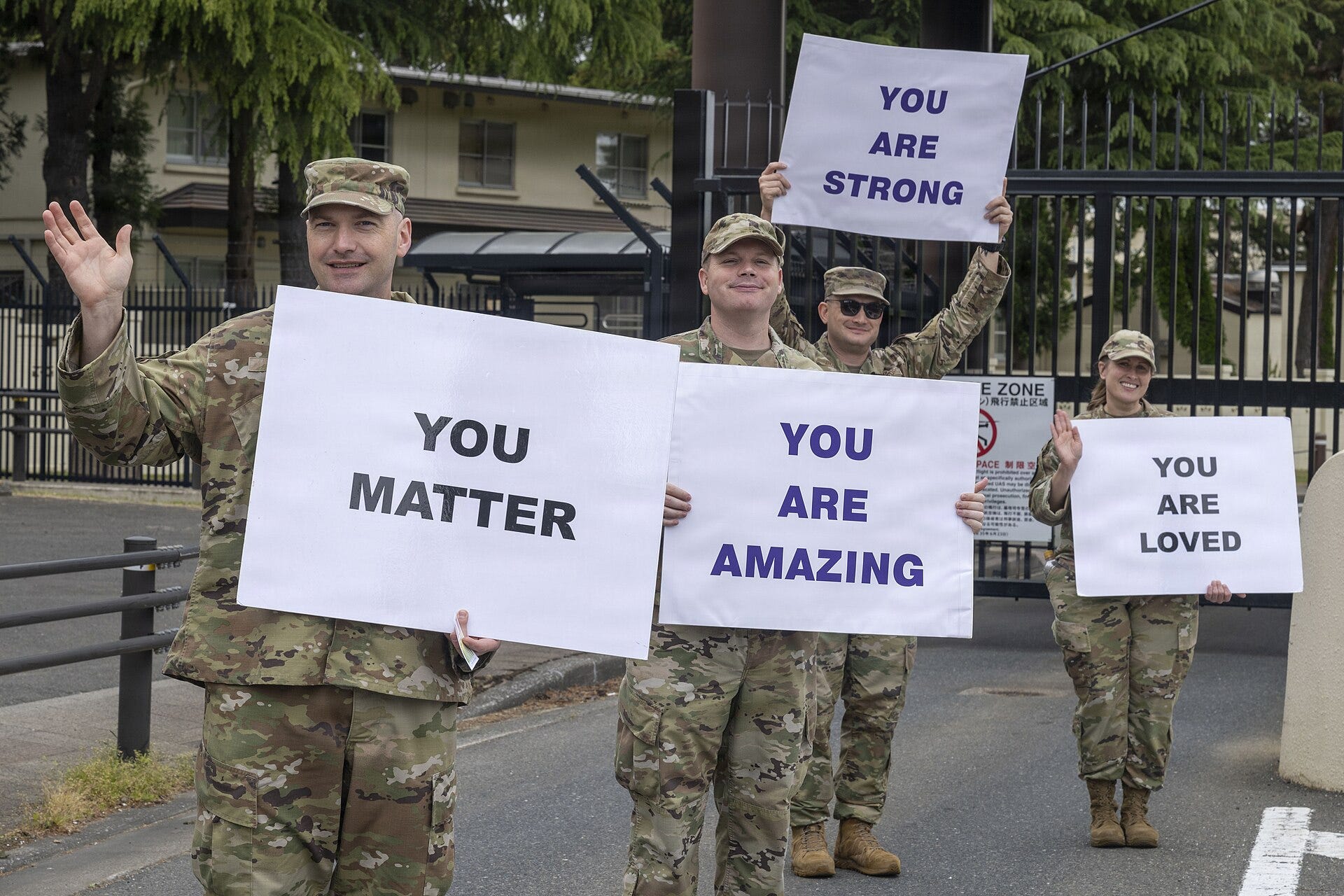
U.S. Air Force first sergeants assigned to the 35th Fighter (FW) Wing advocate Mental Health Awareness Month near Friendship Gate at Misawa Air Base, Japan, May 28, 2026.
Documentation, however, varies substantially, leading to misunderstandings by patients and providers alike. When signature consent is not required, a progress note describing the encounter and containing an entry as brief as “patient consented to the treatment plan” may be enough.
There is no official, publicly available list of all of the instances where signature consent is required; available guidance indicates that signature consent is typically required for procedures involving injections, sedation, or other surgical considerations.
NASW’s redundancy argument therefore assumes that having a policy requiring consent is enough to produce a reliable consent process. Yet, the VA’s own Office of Inspector General had already shown otherwise before this bill was introduced.
The VA’s Own Inspections Reveal a Documentation Gap
In March 2025, an inspection of inpatient mental health care in Central Western Massachusetts found documentation of required risk and benefit discussions in 70% of reviewed records involving veterans newly prescribed central nervous system medications. In June, the documented rate was 34% in Salem, and 22% in Philadelphia. In each report, OIG warned that when veterans are not given an opportunity to discuss medication risks and benefits, they are deprived of the key facts to make informed treatment decisions.
This does not prove that every undocumented conversation never happened; they do suggest the existing policy was poor for producing a consistent or reliably auditable process across VA facilities nationwide.
This was public, directly relevant evidence about informed consent in VA mental health care. Yet, NASW’s explanation did not identify these reports—or any evidence contradicting them— when concluding that stronger requirements were merely duplicative.
The opposition letter also warned that additional requirements could delay urgent care. Of course, treatment matters; but the VA’s current policy already allows necessary care without express consent when immediate treatment is needed to preserve life or prevent serious impairment, the patient cannot consent, and waiting for a surrogate would increase the danger.
So we are left with basic questions.
Why is that emergency exception insufficient to address the concern about immediate care?
What evidence shows that the proposed process would meaningfully delay care?
Why couldn’t any legitimate concern be addressed through amendments?
And mostly, why weren’t veterans consulted before NASW decided the proposal would cause them more harm than good?
We agree that social workers have an obligation to prevent harm.
We disagree that NASW demonstrated that written informed consent would “cause more harm than good.”
Informed Consent Is About Choice, Not Opposition to Treatment
Written informed consent is not a movement to tell people not to take medication. It is about giving them a meaningful opportunity to decide for themselves. This matters because informed consent is one of the first places where preventable harm can begin, not only with medication but across intervention as a whole.
People often enter treatment while distressed, frightened, or dependent on services. They are meeting with someone who can diagnose them, prescribe or recommend treatment, document their behavior, influence whether they are hospitalized, and shape how future professionals interact with them. They may reasonably fear that disagreement will affect the care they receive.
Sometimes, it does.
That is never an equal relationship.

Informed consent cannot equalize that relationship but it places limits on what the more powerful person is allowed to do.
A clinician’s expertise may justify making a recommendation; it does not grant ownership over another person’s decisions. Only the person receiving services can decide which possible benefits are worth pursuing, which risks are acceptable, and what they are unwilling to sacrifice.
That decision cannot belong to the client unless they receive the information needed to make it.
This is where harm begins, not just adverse effects of medication, but when someone discovers that the possibility was known and not explained. Harm isn’t erased just because a clinician believed the treatment was advisable. The person was denied the opportunity to decide what mattered to them before the consequences became theirs.
Social workers are supposed to know this.
We teach our students that informed consent is an ongoing process of self-determination, not a single form at intake. We teach them to explain the nature of services, the foreseeable risks (even ones currently deemed rare), the limits of applying current research evidence to the client’s specific circumstances and traits, the alternatives, the limits of confidentiality, and the client’s right to withdraw. We teach them to recognize that distress, dependence, institutional authority, and oppression shape whether a person feels genuinely free to disagree.
So where did that get lost in translation?
When social work speaks about informed consent in the classroom, we describe it as a safeguard against unchecked professional power. When veterans ask for that safeguard to be made clearer, written, and reviewable, NASW described it as duplicative and potentially harmful.
This issue touches a majority of veterans, with over 2 million veterans (about 1 in 3) accessing services through the Veterans Health Administration (VHA) diagnosed with at least one mental health diagnosis.
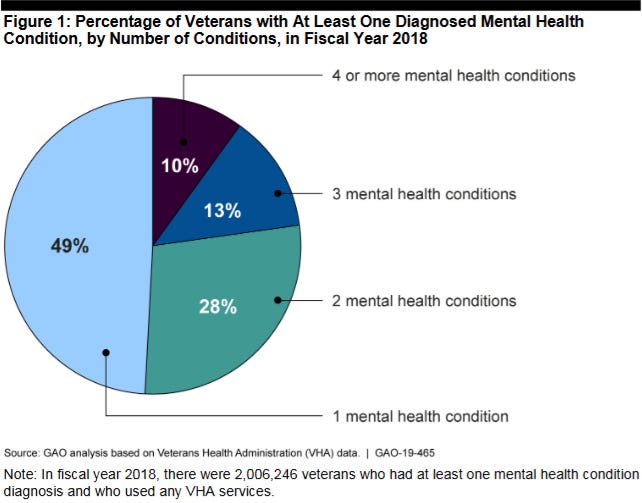
*Debra, D. A. (2019). VA mental health: VHA improved certain prescribing practices, but needs to strengthen treatment plan oversight.
According to a FOIA request of data from 2018-2023, 2.3 million veterans were prescribed psychotropic drugs in 2023, with 66% of them on antidepressants.
A 2019 investigation reviewed the documentation of 75 veterans newly diagnosed with either Major Depressive Disorder (MDD), Post-traumatic stress disorder (PTSD) or Generalized Anxiety Disorder (GAD); it was found that non-drug options were presented as add-ons to psychiatric drugs more often than it was considered as an alternative across each diagnosis. Additionally, 60% of MDD cases reviewed, and 40% of PTSD cases had no documentation of being offered non-drug options whatsoever.
These inconsistencies are especially concerning given recent findings that even when patient preferences for treatment are known, they don’t appear to impact treatment. Another study of patient preferences in VA clinics nationally from 2018-2020 found that 32% of veterans who preferred medication and 22% of veterans who preferred psychotherapy did not receive their preferred treatment; a majority of patients overall (51%) reported a strong preference for non-drug psychotherapy compared to medication.
This professional opposition seems to represent a stronger undercurrent of paternalism that the providers have the right to trump veterans’ preferences for their own treatment and bodily autonomy.
NASW did not say it consulted veterans. It did not identify veterans who participated in the discussion, explain how their experiences were weighed, or describe any effort to ask the people affected whether the current process was working.
That distinction matters because the NASW’s Code of Ethics instructs social workers to do more than just “consider” clients when professionals make decisions on their behalf.
Its informed consent standard is even more specific: clients should receive clear and understandable information about the purpose of services, their risks, reasonable alternatives, and their right to refuse or withdraw consent.
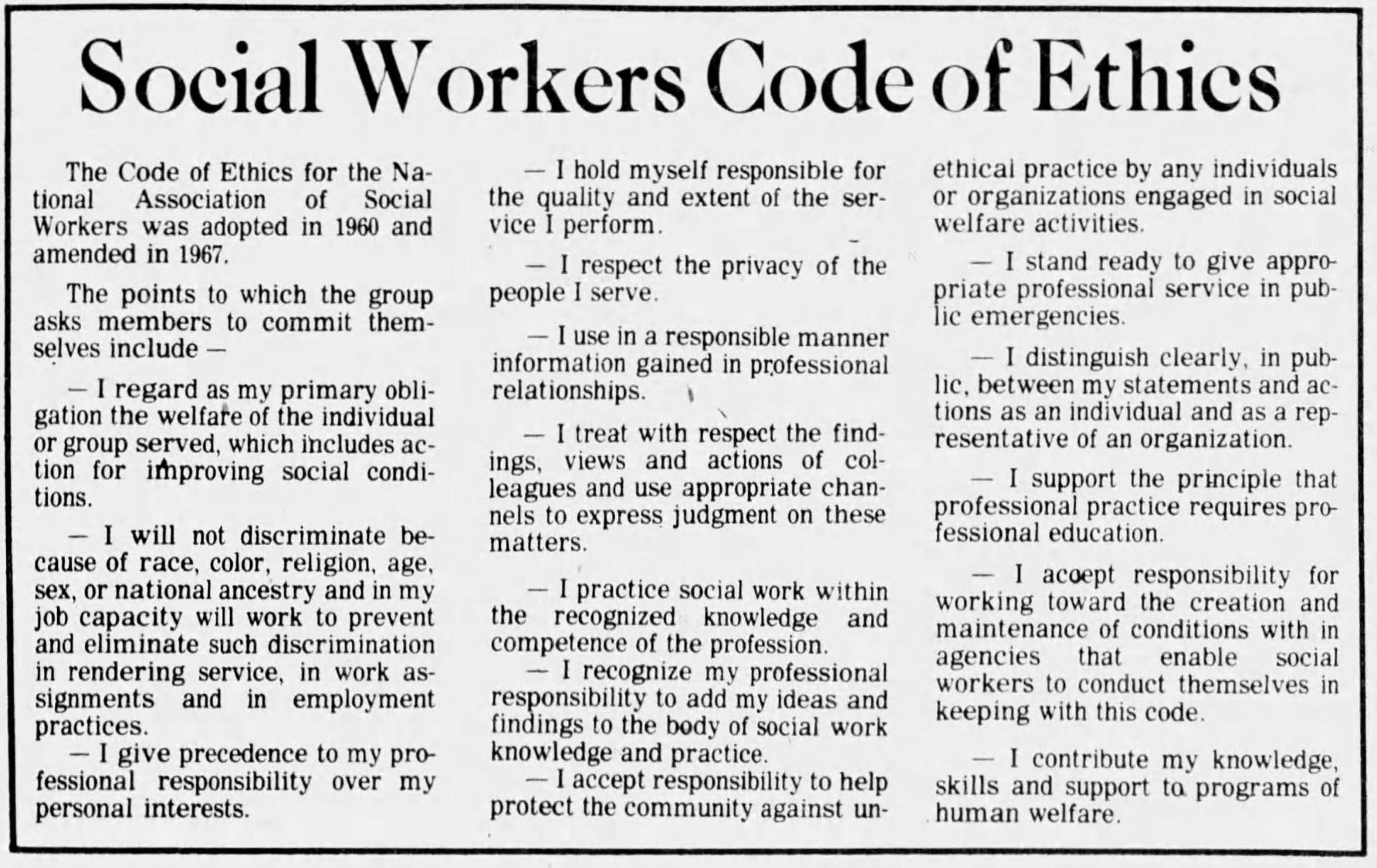
(Social Workers Code of Ethics Circa 1960-70s): The Star Press, Sun, Mar 06, 1977, Page 11
The Code of Ethics is not a peripheral suggestion—it is the core guiding source of ethical provisions and recommendations for practitioners. This Code describes what must happen in social work before professional authority can be ethically exercised. Informed consent is the bare minimum to prevent harm.
The practical solutions are not difficult to imagine. Congress should correct the obsolete citation and amend the proposal to require a structured, plain-language consent process rather than a signature alone. That process should address expected benefits, material risks, uncertainties, reasonable alternatives, plans for monitoring, and what is known about changing or stopping treatment. It should require consent to be revisited after significant treatment changes and give veterans information they can review outside of the appointment.
Veterans in the US account for a disproportionate 13.9% of suicides across adults in the US; in 2023, 6,396 veterans completed suicide - about 17 each day. This epidemic requires careful attention, monitoring across treatment, and empowerment for the people currently being underserved by our available systems.
It is worth noting that common psychotropic drug classes carry a number of FDA safety warnings, including black box warnings (BBWs) for suicidality on many antidepressants (SSRIs). Unfortunately, for more than half of the current BBWs across medications, the risk was only acknowledged after approval, marketing, and prescription to the public.
There may also be a consistent underreporting of adverse effects - making it imperative that people are given full, meaningful information in order to make their own decisions. It’s estimated that only a minority of adverse effects (~10%) are reported to oversight systems such as MedWatch.
Informed consent materials need to be made accessible, available in multiple languages, and developed with veterans - not simply for them. The VA should then audit whether these discussions are occurring and evaluate whether the process improves understanding, affects access to care, or creates unintended burdens.
NASW could have supported the goal while recommending substantial amendments. It could have asked Congress to define which medications, circumstances, and treatment durations would trigger the requirement. It could have proposed a pilot program. It could have requested research. It could have insisted that veterans participate in the design and evaluation of the process.
NASW did not have to endorse the bill exactly as written. It did not have to minimize concerns or pretend that paperwork is harmless.
It also did not have to oppose it.
Opposition is not a neutral position. NASW used the political authority of the profession to try to stop the proposal. Concessions within the letter do not absolve them of the weight of the opposition they have chosen to endorse—and in some ways, it is now our own.
Perhaps NASW conducted more of an analysis than it shared with us. If so, that analysis should be made public. A national professional organization should be able to explain how it concluded that giving patients more structured and reviewable information would cause more harm than good—especially when organizations representing the affected population reached the opposite conclusion.
This raises a larger question about how NASW understands its role.
Is social work an independent profession with its own analysis of power, autonomy, and institutional harm? Or does it fall into step when organizations representing more medically dominant professions announce what they believe is best for patients?
The King Drinks - drawing, copy after Jacob Jordaens (MET, 1975.1.838)
This is not a new tension. As early as 1995, in Unfaithful Angels, Harry Specht and Mark Courtney warned that social work’s pursuit of clinical legitimacy (akin to the APA’s) could pull the profession away from its social mission and from people with the least institutional power. Critics of organized psychiatry, including Robert Whitaker and Lisa Cosgrove, have raised related concerns about how professional-guild interests and pharmaceutical-industry relationships can influence which evidence institutions elevate, which harms they minimize, and which policies they defend.
The letter that the NASW signed cites concern that “Singling [veterans receiving psychiatric drugs] out for extra procedural requirements risks reinforcing stigma around mental health treatment and may discourage veterans from initiating or continuing essential care.”
A concern about “stigma” cannot become a trump card to explain away a patient’s desire for more information. A person who hesitates after learning about a risk has not been stigmatized out of treatment. They may be using the information exactly as intended: to decide whether that treatment fits their needs, values, and tolerance for risk.
If fuller information changes a veteran’s decision, why do we rush to call that “stigma” and not autonomy? If they are not entitled to make that decision, then let’s call it what it is: coercive treatment.
Autonomy must include the possibility of a better-informed “no.”
The Code of Ethics does not predetermine the answer to every ethical challenge. It does, however, determine which questions social workers cannot ethically avoid. Who holds power? Who bears the consequences? Were the affected people included? What evidence supports restricting those choices?
NASW asks individual social workers to confront these questions in their daily practice, in research, and in the classroom. It must confront them when speaking in the name of the profession.
When an organization invokes social work’s authority to oppose a patients’ rights proposal, consideration from a distance is not enough.
It should be obvious (especially to social workers), but bears repeating:
The people who will live with the consequences must have a place in the decision.
The cover photo of this article was taken by Wendy Mann
NASW’s smoke screen deflection of wanting to protect veterans using psychiatric medications from stigma is barely worthy of the energy required to tap a response here in the app to that claim.
But I’ll do so regardless, because although this bill—which needs to be approved and also worked on either before or after the fact to make it of greater benefit to all—will become, like it or not, a potential cut & paste scaffold of some kind, for the civilian population who are also duly deserving and fully in need of a structured, diverse in format/presentation, AND to the NASW’s ridiculous complaint, ‘duplicative’ process.
Currently, we’ve got millions, yes millions, of human beings who trusted their prescribers in the psych med harmed community who report and I don’t doubt a single one of us—that we received no information whatsoever about:
1. benefits in the short term vs potential detriment in the long term of psychiatric medications
2. harrowing withdrawals on their discontinuation
3. potential permanent neurological injury
4. potential to develop intrusive thoughts over which we have no control and unfortunately take action on
So, let’s dispense with the middle school debate team level deflections as ludicrous as opposing a format to be put in place to protect an extremely vulnerable population that the NSAW has put their reputation on the line with.
The stigmatization of the veteran population has very little to do with their potential or current use of psychiatric medications.
The ‘othering’ of this population began the moment they completed their deployments, which in most cases began with saccharin appreciation and promptly ended on the completion of their tours of duty when profoundly challenged and pained they became human eyesores to those of us who would not for a moment consider standing at a line of offense in service of others.
Veterans are poly drugged with psych meds and interventions because the truth of their sacrifice makes people uncomfortable with their inner knowing that nothing could ever move them to do the same.
Let’s stop dancing around what is truly going on in the vast psych harm machine’s motives behind Informed Consent for veterans.
And by the way, the rest of us, who never served in the military but who have been deeply harmed—we are all watching, and listening, and reading—very carefully what the agencies ‘in charge’ are claiming about their positions on issues.
And, we will call Bull Shit however many times is required.